From the ACE database. Researched and checked against published sources.
Vidkun Quisling
1887 to 1945, founder of Nasjonal Samling and Minister President of occupied Norway from 1942 to 1945
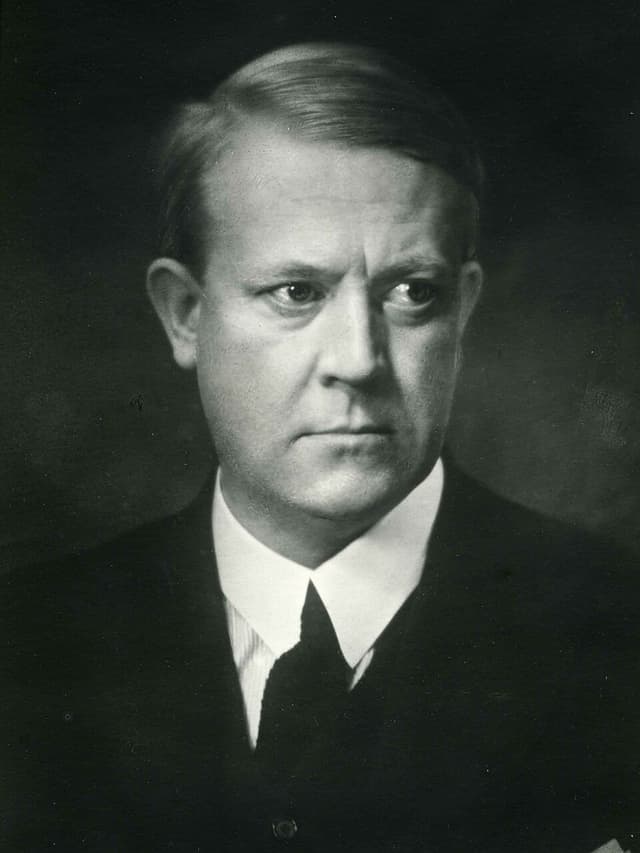
Riksarkivet (National Archives of Norway) from Oslo, Norway, No restrictions, via Wikimedia Commons
54/100
ACE Score: 54/100
Medium on the scale. An index, not a percentage.
65Medium
How total and coercive the leader’s power was.
47Medium
How devoted to and dependent on the leader followers became.
50Medium
How hard it was to leave.
(rule-based):Pattern: a closed system with little institutional restraint, where harm was aimed mainly at outsiders. A label for these scores, not a forecast. The summary and caveats describe what actually happened.
Scores are an interpretation of published sources using the ACE scoring guide, not findings of fact. Inclusion does not classify anyone as a cult. Disclaimer
Quisling was a former army officer and defence minister who founded the fascist party Nasjonal Samling in 1933. It never won more than about 2 percent of the vote. When Germany invaded in April 1940 he declared himself head of government on the radio, and from 1942 he served as Minister President under German control. His government helped deport Norway's Jews in 1942 and tried to force teachers, churches and youth into the party line. He was executed for treason in October 1945.
In academic terms, quisling shows how low charisma and weak voluntary binding can coexist with real harm when state power comes from an occupier. Closures were moderate and imposed from above, with an outward vector through participation in the Holocaust.
Where scholars disagree
The case that the framework fits
Dahl shows Quisling's messianic self-image and his belief that he was destined to lead Norway, and his regime did take part in genocide.
The case that it does not fit, or overstates
Hoidal and others stress that Quisling had little popular following, no real independent power and almost no charisma; he is better seen as a collaborator than a cult leader.
The five walls
5.4 of 10
- 6
1.
Who decides what is real?
Under occupation the press and radio were censored and the regime tried to impose its ideology on schools and churches, though Norwegians widely listened to banned BBC broadcasts.
- 4
2.
Are friends and family outside the group cut off?
The regime made membership of its youth organisation compulsory in 1942, but mass resistance by teachers and parents largely defeated the plan.
- 6
3.
How hard is it to physically leave?
Occupied Norway restricted travel and imprisoned opponents, but thousands escaped to Sweden or Britain.
- 4
4.
Is an apocalypse or a destined triumph always near?
Quisling's ideology promised a Nordic revival and an alliance against Bolshevism, framed as a historic mission but not an imminent end.
- 7
5.
Does the group decide who deserves to live?
Norwegian police under his government arrested Jews, and about 770 were deported to Auschwitz in 1942 and 1943, most of whom were murdered; resistance members were executed.
Debt, dependence and harm
4 of 10, medium
How much do followers feel they owe?
Party members held state jobs and some joined Waffen-SS units, but most Norwegians refused to join and paid little personal cost beyond conforming.
6 of 10, medium
How far does everything rest on one person?
Quisling sat atop a Norwegian civil service but real power lay with Reichskommissar Terboven; his party depended on him and collapsed with the occupation.
+6, mostly outsiders
When the system turns violent, where does the harm go?
Violence was directed at Jews and resistance members; the regime's share in deportations to Auschwitz drives the score, though German authorities ran the killing.
Methods of control
Specific techniques from the historical record that kept followers loyal and the bubble sealed.
- 01Leader principle within the party
- 02Censorship under occupation
- 03Attempts to force teachers and clergy into party bodies
- 04Compulsory youth organisation
- 05Police arrests and deportations
- 06Reliance on German military power
Against the reference cases
State power, violence aimed outward
Compared with Hitler
Quisling imitated Hitler's model but held only borrowed power; his name became a byword for collaboration.
A sealed group, violence aimed inward
Compared with Jones
Unlike Jones, Quisling had few devoted followers and no means of sealing them off from society.
Through the theorists
Quisling claimed charismatic authority but never received the recognition from followers that Weber says charisma needs.
Albert Hirschman
Norwegians' widespread refusal to join, from teachers to clergy, shows exit and voice working against an imposed loyalty.
Robert Paxton
Paxton's stages of fascism place Nasjonal Samling among movements that never rooted themselves and reached power only through an occupier.
Key sources
Strong evidence base
- Dahl, Hans Fredrik (1999). Quisling: A Study in Treachery.
- Hoidal, Oddvar K. (1989). Quisling: A Study in Treason.
Caveats
Separating Quisling's responsibility from that of German authorities is difficult. Postwar trial evidence and his own writings shape the record. Scores describe 1942 to 1945.
Cite this profile
Koziol, T. (2026). Vidkun Quisling. In ACE: Authority, Cult & Exit (Version 1.1, pilot database). Ceraluna Labs. https://cultornot.com/leader/vidkun-quisling