From the ACE database. Researched and checked against published sources.
Jim Jones
1931 to 1978, Peoples Temple, active in Indianapolis, California (Redwood Valley, San Francisco, Los Angeles) and Jonestown in Guyana
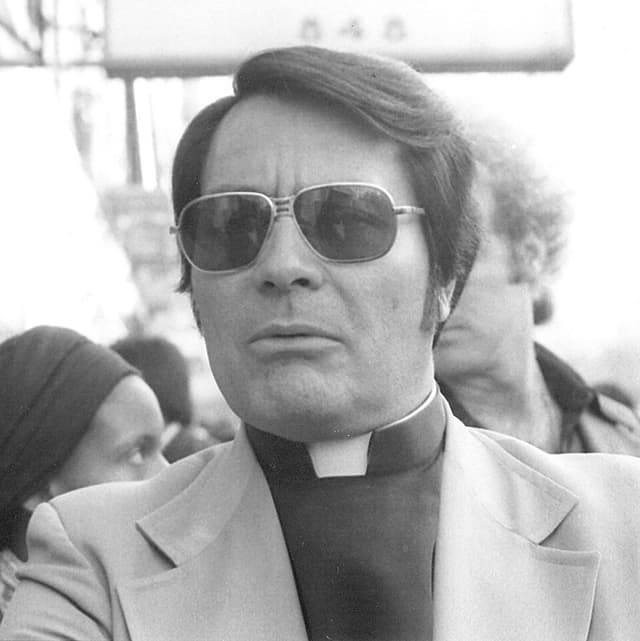
Nancy Wong, CC BY-SA 4.0, via Wikimedia Commons
94/100
ACE Score: 94/100
High on the scale. An index, not a percentage.
100High
How total and coercive the leader’s power was.
87High
How devoted to and dependent on the leader followers became.
95High
How hard it was to leave.
(rule-based):Pattern: a closed system with little institutional restraint, where harm was aimed mainly at its own people. A label for these scores, not a forecast. The summary and caveats describe what actually happened.
Scores are an interpretation of published sources using the ACE scoring guide, not findings of fact. Inclusion does not classify anyone as a cult. Disclaimer
Jim Jones built Peoples Temple as a racially integrated church that mixed Pentecostal-style healing with socialist politics. In California he gained real political influence, but inside the church he demanded total loyalty, money and confessions. In 1977 he moved about a thousand followers to an isolated settlement in the Guyanese jungle called Jonestown. On 18 November 1978, after his followers killed US Congressman Leo Ryan and four others at a nearby airstrip, more than 900 people died at Jonestown, most by drinking or being injected with cyanide-laced punch, including over 300 children.
In academic terms, jonestown is the reference case of maximal closure on every dimension combined with near-total leader dependence, where a sealed enclave, rehearsed 'revolutionary suicide' and rising persecution fears turned violence inward on the members themselves.
The story in pictures
From a small church in Indianapolis to a sealed settlement in the Guyanese jungle: seven moments in how the walls went up, using photographs from Wikimedia Commons.
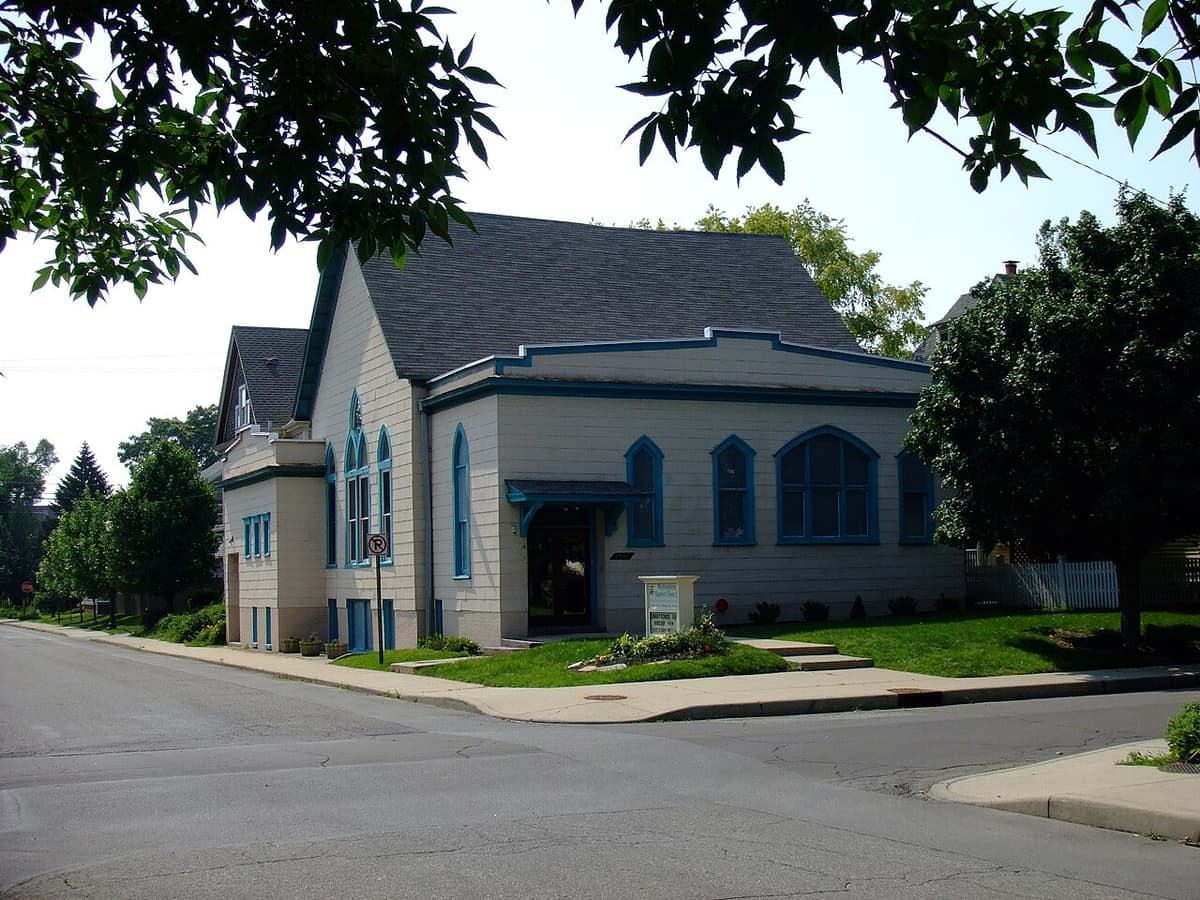
01 / 07
1955
A church for everyone
Jones founded the church that became Peoples Temple in Indianapolis. It was racially integrated at a time when few churches were, and it ran soup kitchens and care homes. Many early members joined for that promise of a fairer community.
Indytnt, CC BY-SA 3.0, via Wikimedia Commons
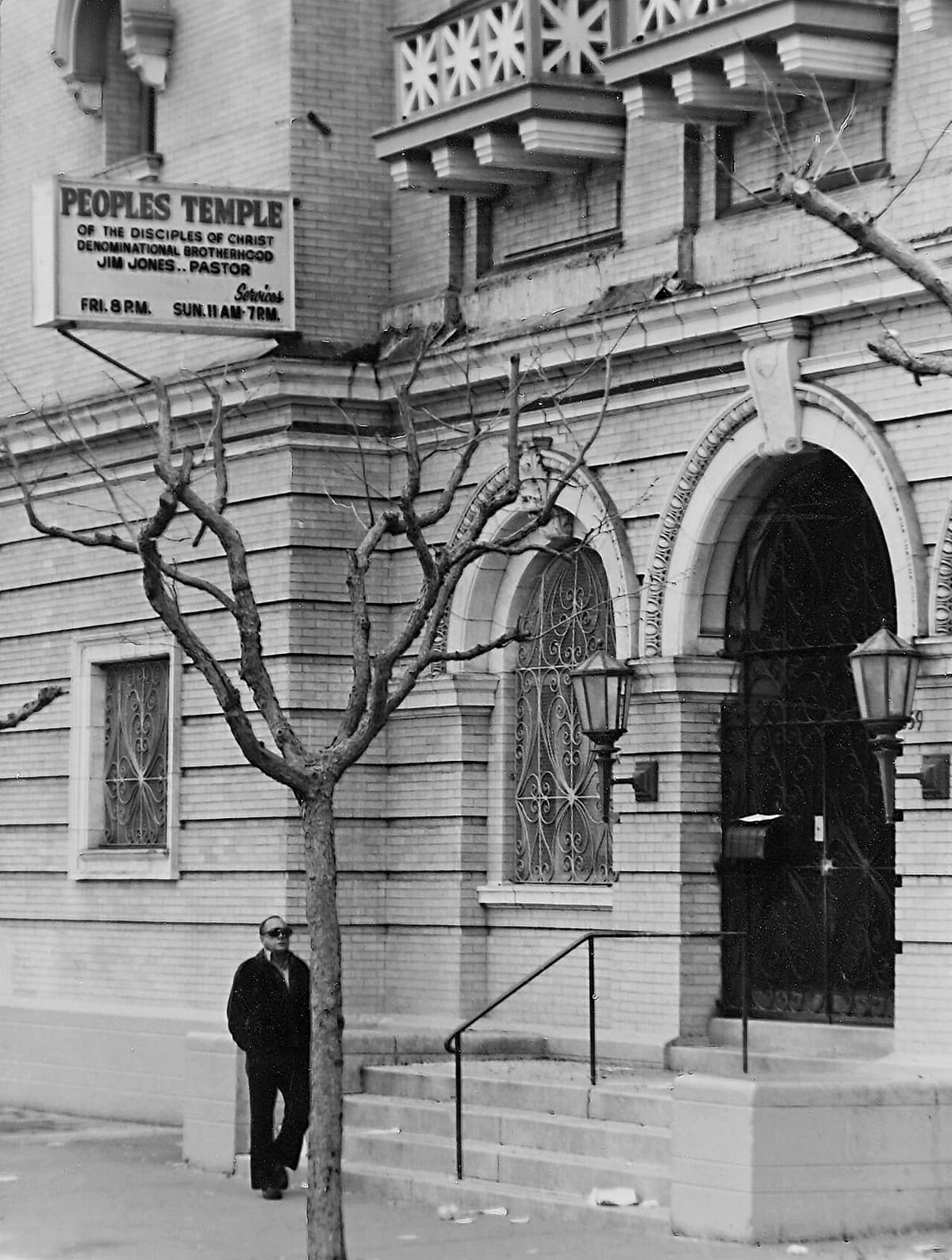
02 / 07
1965 to 1975
California
Jones moved the congregation to Redwood Valley in northern California and then built large temples in San Francisco and Los Angeles. He combined Pentecostal-style faith healing with socialist politics and asked members for more of their money, time and loyalty.
Nicolas Martin, CC BY-SA 4.0, via Wikimedia Commons
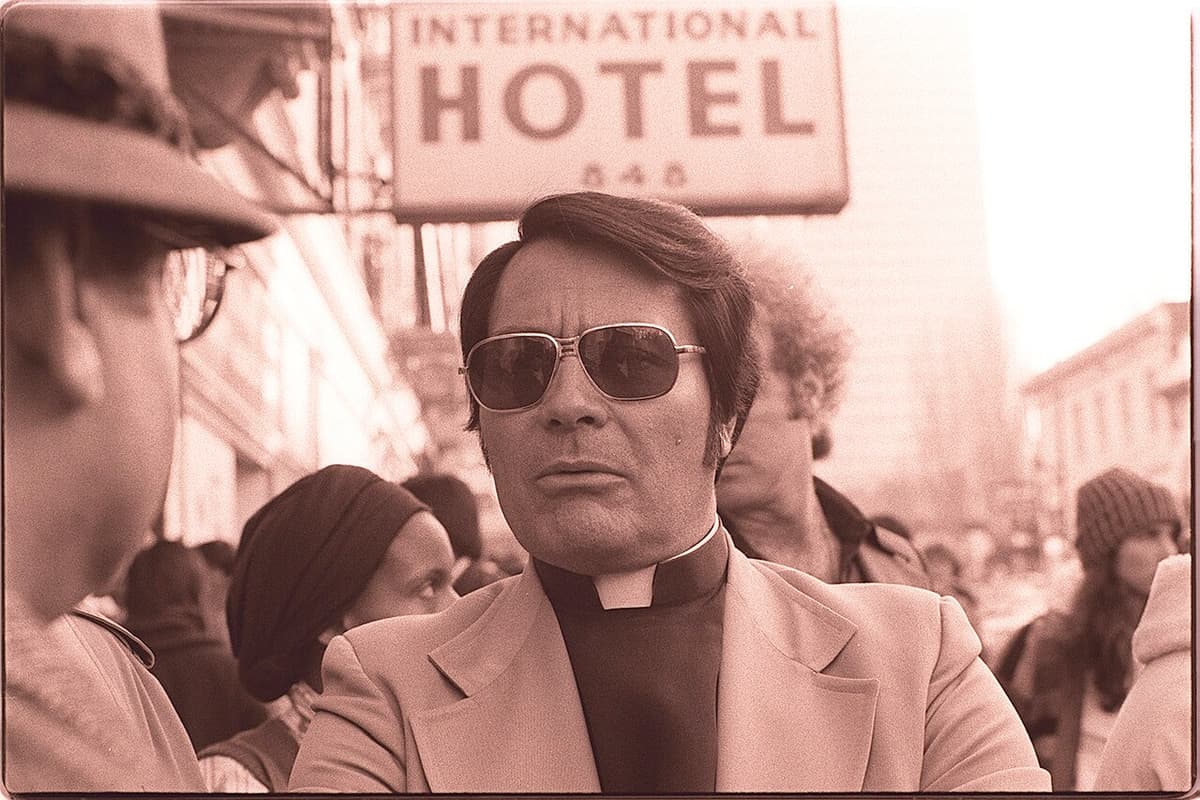
03 / 07
1977
Political influence
By the mid-1970s Peoples Temple could bring hundreds of volunteers to a rally or a campaign, and Jones was appointed to San Francisco’s Housing Authority. Inside the church, members were signing confessions and handing over property.
Nancy Wong, CC BY-SA 4.0, via Wikimedia Commons
04 / 07
1977
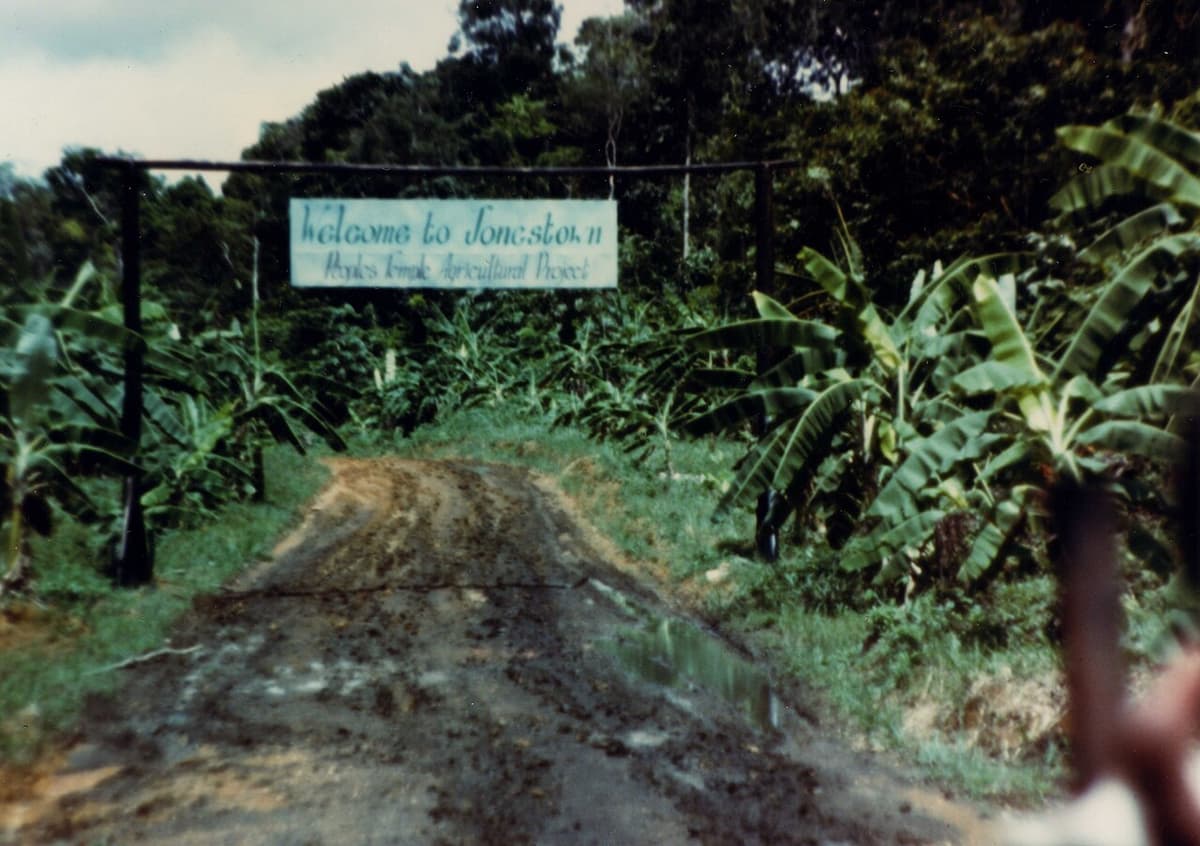
The move to Guyana
As journalists began to report abuses, Jones moved about a thousand followers to an agricultural settlement he had started in the jungle of north-western Guyana. It was reachable mainly by boat or small plane.
The original uploader was Mosedschurte at English Wikipedia., Attribution, via Wikimedia Commons

05 / 07
1977 to 1978
Inside the walls
At Jonestown, passports were held by the leadership, mail was controlled and Jones’s voice came over the loudspeakers for hours each day. Members rehearsed mass suicide in drills he called White Nights.
Federal Bureau of Investigation, Public domain, via Wikimedia Commons
06 / 07
18 November 1978
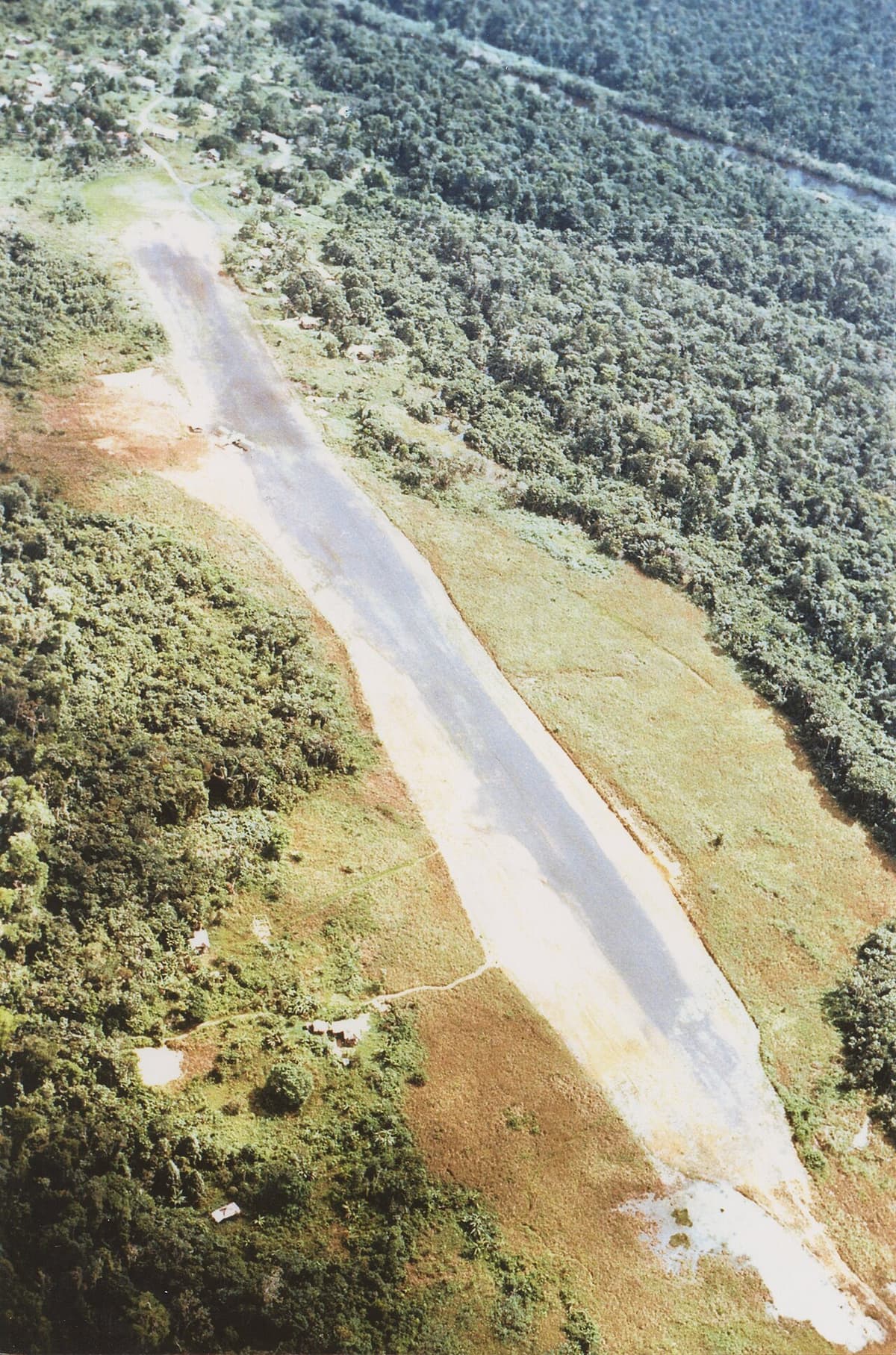
The airstrip
Congressman Leo Ryan visited to investigate. As his party prepared to leave from the Port Kaituma airstrip with members who wanted to go, Temple gunmen killed Ryan and four others. That evening more than 900 people died at Jonestown, over 300 of them children.
Federal Bureau of Investigation, Public domain, via Wikimedia Commons
07 / 07
Remembering
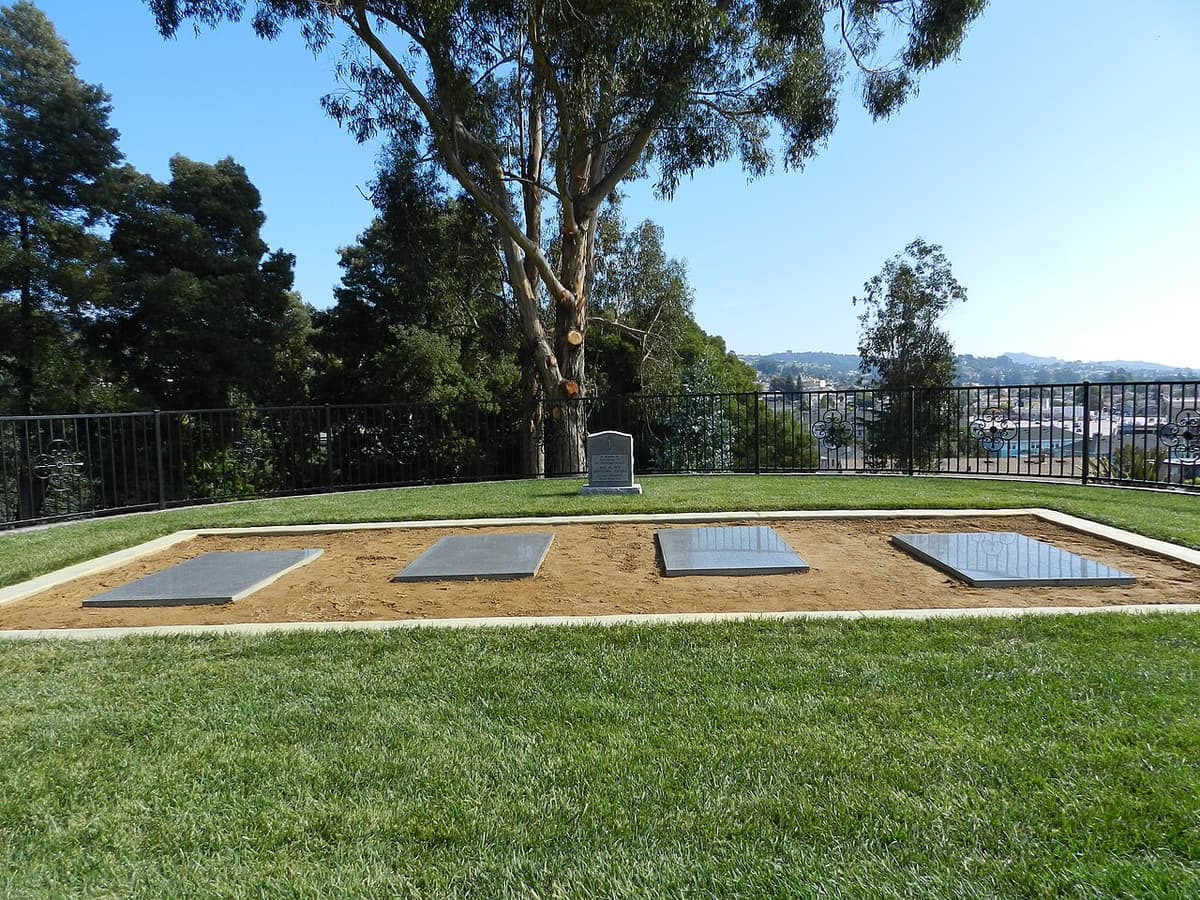
The names
Many of the dead were never claimed and were buried together in Oakland, California. Memorial stones listing the names of those who died were added in 2011.
Mercurywoodrose, CC BY-SA 3.0, via Wikimedia Commons
Swipe, use the arrow keys or pick a date. Images from Wikimedia Commons, shown in greyscale.
Where scholars disagree
The case that the framework fits
Scholars across approaches agree Jonestown shows extreme control: sealed space, total information management, rehearsed death and a leader with no institutional check.
The case that it does not fit, or overstates
Some scholars, including Chidester and Hall, stress that members saw themselves as political radicals and that outside pressure from relatives, journalists and the Ryan visit shaped the ending; they question calling all deaths 'suicide' when many were coerced or were children.
The five walls
9.4 of 10
- 10
1.
Who decides what is real?
At Jonestown, Jones's voice was broadcast over loudspeakers for hours each day and mail and phone contact were controlled. Doubt was punished at public 'catharsis' meetings.
- 9
2.
Are friends and family outside the group cut off?
Members were urged to treat outside relatives as enemies, and children were raised largely communally and taught to call Jones 'Dad'. Families were split up and members were encouraged to report on each other.
- 10
3.
How hard is it to physically leave?
Jonestown was a remote clearing in the Guyanese jungle reachable mainly by boat or small plane, with armed guards and passports held by the leadership. Members who wanted to leave had no practical way out.
- 8
4.
Is an apocalypse or a destined triumph always near?
Jones preached imminent nuclear war, fascist takeover and racial genocide in the United States. He held 'White Night' drills in which members rehearsed mass suicide.
- 10
5.
Does the group decide who deserves to live?
More than 900 people died on 18 November 1978, many of them children who could not consent. Temple gunmen killed Congressman Leo Ryan and four others at Port Kaituma airstrip the same day.
Debt, dependence and harm
9 of 10, high
How much do followers feel they owe?
Committed members handed over homes, wages, savings and welfare checks to the Temple. Many signed false confessions to crimes or sexual misconduct that the leadership could use against them.
9 of 10, high
How far does everything rest on one person?
The Temple had a Planning Commission and staff, but all authority flowed from Jones personally. There was no plan for the church to continue without him.
-8, mostly insiders
When the system turns violent, where does the harm go?
Almost all of the dead were members and their children. The killing of Ryan, three journalists and a defector at the airstrip adds a smaller outward component.
Methods of control
Specific techniques from the historical record that kept followers loyal and the bubble sealed.
- 01Public confession and humiliation sessions ('catharsis')
- 02Surrender of property, wages and welfare income
- 03Signed false confessions held as leverage
- 04Isolation in a remote jungle settlement with guards
- 05Loudspeaker indoctrination and controlled mail
- 06Rehearsed mass-suicide drills ('White Nights')
- 07Framing outsiders and relatives as a conspiracy against the group
Against the reference cases
State power, violence aimed outward
Compared with Hitler
Hitler turned closure outward against a whole population of enemies, while Jones turned a similar level of closure inward until it destroyed his own community.
A sealed group, violence aimed inward
Compared with Jones
This is the calibration case for the batch; other profiles are scored relative to it.
Through the theorists
Jones held pure charismatic authority that he never routinised; as his health and control slipped, he raised the stakes rather than building an office that could outlast him.
Wessinger
Wessinger calls Peoples Temple a 'fragile' millennial group: internal weakness plus perceived outside persecution made its leaders choose violence to preserve their goal.
Chidester
Chidester reads Jonestown through the members' own worldview, in which 'revolutionary suicide' was a meaningful act of protest rather than simple madness.
Key sources
Strong evidence base
- Reiterman, Tim, with John Jacobs (1982). Raven: The Untold Story of the Rev. Jim Jones and His People.
- Chidester, David (1988). Salvation and Suicide: An Interpretation of Jim Jones, the Peoples Temple, and Jonestown.
- Wessinger, Catherine (2000). How the Millennium Comes Violently: From Jonestown to Heaven's Gate.
Caveats
Much of the record comes from defectors, journalists and the Temple's own audio tapes, each with its own bias. Control rose sharply after the move to Guyana; scores reflect the Jonestown period. Whether the deaths should be called suicide or mass murder is still debated.
Cite this profile
Koziol, T. (2026). Jim Jones. In ACE: Authority, Cult & Exit (Version 1.1, pilot database). Ceraluna Labs. https://cultornot.com/leader/jim-jones