From the ACE database. Researched and checked against published sources.
Corneliu Zelea Codreanu
1899 to 1938, founder and leader of the Legion of the Archangel Michael in interwar Romania
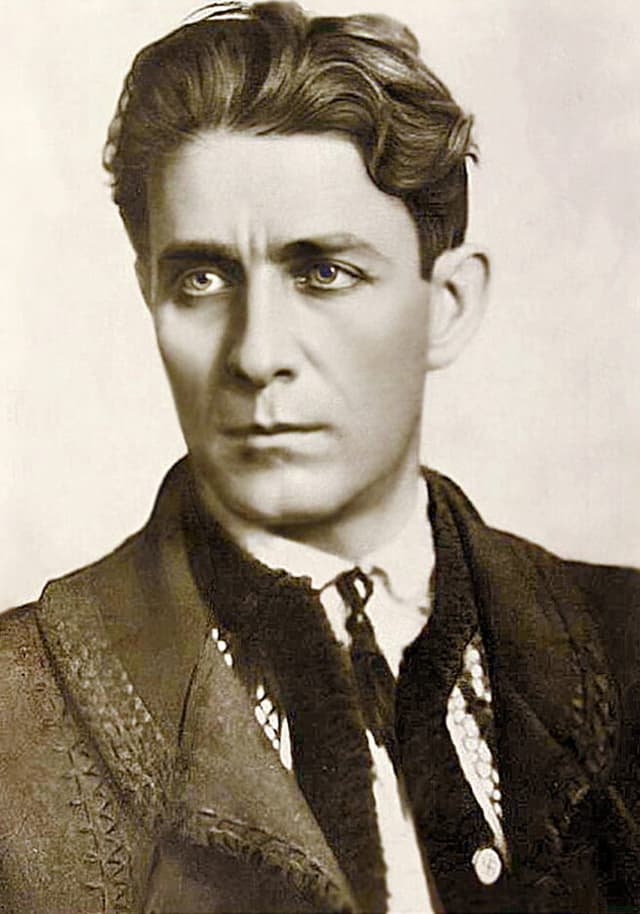
Unknown author, Public domain, via Wikimedia Commons
56/100
ACE Score: 56/100
Medium on the scale. An index, not a percentage.
65Medium
How total and coercive the leader’s power was.
63Medium
How devoted to and dependent on the leader followers became.
40Medium
How hard it was to leave.
(rule-based):Pattern: a closed system with little institutional restraint, where harm was aimed mainly at outsiders. A label for these scores, not a forecast. The summary and caveats describe what actually happened.
Scores are an interpretation of published sources using the ACE scoring guide, not findings of fact. Inclusion does not classify anyone as a cult. Disclaimer
Codreanu was a law student who founded the Legion of the Archangel Michael in 1927, later known through its militia, the Iron Guard. The movement mixed Orthodox Christian ritual, intense antisemitism and a call for the moral rebirth of Romania. Members were organised in small cells called nests and did voluntary labour in work camps. Legionaries killed Prime Minister Ion Duca in 1933 and a defector, Mihai Stelescu, in 1936. Codreanu was arrested in 1938 and killed by the authorities while in custody.
In academic terms, codreanu built high devotion debt through ritual, oaths and a cult of sacrificial death, with moderate social and spatial closure. Its violence was outward assassination and antisemitic agitation during his life, with the largest killings coming after his death.
Where scholars disagree
The case that the framework fits
Iordachi analyses the Legion explicitly as a charismatic movement with a religious cult of the leader, and Clark shows how ritual and activism bound young members, fitting a political-religion model.
The case that it does not fit, or overstates
Clark also stresses that ordinary activism, social networks and electoral politics drew most members, not cult-like submission, and the Legion competed openly in elections, winning about 16 percent in 1937.
The five walls
5.4 of 10
- 6
1.
Who decides what is real?
The Legion treated Codreanu's writings and orders as moral law and rejected parliamentary politics and the press as corrupt, though members still lived in open society.
- 5
2.
Are friends and family outside the group cut off?
The nest system and work camps absorbed members' time and loyalties, and the Legion organised its own family and youth life, but ordinary family ties persisted.
- 3
3.
How hard is it to physically leave?
Members lived at home and joined voluntarily; work camps were temporary and leaving was possible, though defectors risked reprisal.
- 6
4.
Is an apocalypse or a destined triumph always near?
The movement preached national resurrection and a 'new man', framed as a spiritual struggle with eternal stakes, which shaped members' daily discipline.
- 7
5.
Does the group decide who deserves to live?
Jews were cast as enemies of the nation in doctrine; Codreanu himself shot dead the Iași police prefect Constantin Manciu in 1924 and was acquitted, and Legion death squads killed Prime Minister Duca in 1933 and the defector Stelescu in 1936.
Debt, dependence and harm
7 of 10, high
How much do followers feel they owe?
Members swore an oath, followed strict rules of conduct and were taught that death for the Legion was a sacred honour; the 1937 funeral of two legionaries killed in Spain became a cult of sacrifice.
6 of 10, medium
How far does everything rest on one person?
The Legion had ranks, nests and a political party, and Horia Sima emerged as leader by 1940, after Codreanu's death, but authority centred on Codreanu as 'Captain'.
+5, mostly outsiders
When the system turns violent, where does the harm go?
During Codreanu's life violence was mainly assassinations of political opponents and attacks on Jews; the 1941 Bucharest pogrom came under his successor, which this score does not include.
Methods of control
Specific techniques from the historical record that kept followers loyal and the bubble sealed.
- 01Small cells (nests) with their own rituals
- 02Oath and strict code of conduct
- 03Voluntary labour camps
- 04Orthodox religious ritual fused with politics
- 05Cult of martyrdom and sacrificial death
- 06Assassination of enemies and defectors
Against the reference cases
State power, violence aimed outward
Compared with Hitler
Like Hitler, Codreanu led a fascist movement built on a leader cult and antisemitism, but he never held state power.
A sealed group, violence aimed inward
Compared with Jones
Like Jones, Codreanu sacralised death for the cause, but violence was aimed outward and members were not sealed off from society.
Through the theorists
Iordachi uses Weber to show Codreanu's charisma emerging from trials, martyr imagery and religious display.
Emilio Gentile
The Legion is a clear case of fascism as political religion, with ritual, saints and a promise of national redemption.
Roger Griffin
The call for national rebirth and a 'new man' fits Griffin's definition of fascism as palingenetic ultranationalism.
Key sources
Strong evidence base
- Iordachi, Constantin (2004). Charisma, Politics and Violence: The Legion of the 'Archangel Michael' in Inter-war Romania.
- Clark, Roland (2015). Holy Legionary Youth: Fascist Activism in Interwar Romania.
- Nagy-Talavera, Nicholas M. (1970). The Green Shirts and the Others: A History of Fascism in Hungary and Rumania.
Caveats
Codreanu's own memoir and Legion literature are propaganda and inflate his charisma. Violence rose sharply after his death under Horia Sima in 1940 and 1941, which is excluded from this score.
Cite this profile
Koziol, T. (2026). Corneliu Zelea Codreanu. In ACE: Authority, Cult & Exit (Version 1.1, pilot database). Ceraluna Labs. https://cultornot.com/leader/corneliu-zelea-codreanu